Meeting on the Jurisprudential and Legal Analysis of the Bitcoin ETF Proposal Held for the First Time at the Securities and Exchange Organization of Iran
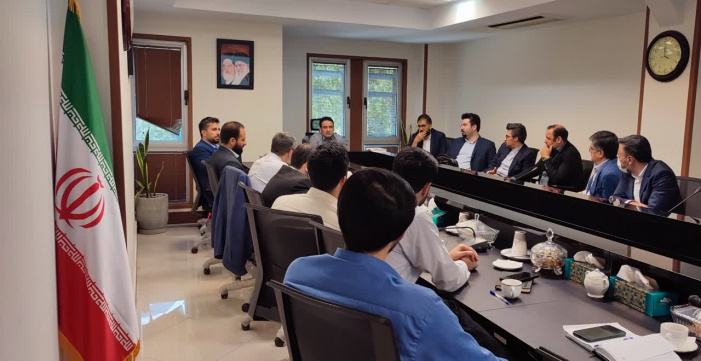
The specialized session for the jurisprudential examination of the “Bitcoin Exchange-Traded Fund (Bitcoin ETF)” proposal was hosted by the Islamic Finance Department of the Securities and Exchange Organization, with the participation of managers and experts from the Iran Mercantile Exchange, Zagros Investment Consulting Company, Toranj Investment Consulting Company, Mazdax Company, and Cimex Company, and was held at the Securities and Exchange Organization. This fund is the first financial instrument for investing in digital assets in Iran. In this event, Dr. Javad Soltanifard, faculty member in the field of Jurisprudence and Private Law at the Higher School and Shahid Motahari University, as a researcher in Islamic economic jurisprudence, attended together with a group of specialists and capital market practitioners and examined one of the most important jurisprudential-legal challenges in this field, namely the “property status (māliyat) of Bitcoin.”
In this session, Dr. Soltanifard, referring to the growing expansion of cryptocurrency transactions, examined the concept of “māliyat” (property status) from the perspective of Islamic jurisprudence and law and its application to the emerging phenomenon of “Bitcoin.” While referring to the usage of the terms “māl” (property) and “māliyat” in religious and jurisprudential texts, he emphasized that the application of jurisprudential rulings concerning property to objects requires that the designation of “māl” truly applies to them. Establishing the property status of objects becomes necessary because, in today’s society, people encounter matters in their financial and economic relations for which applying the concept of māl is not as straightforward as in the past—as it was regarding “physical objects” and “benefits.” Such matters range from “copyright” and “goodwill (ḥaqq-e sar-qoflī)” to newer phenomena such as “in-game digital assets,” “social media pages with large numbers of followers,” and specifically “digital currencies.” Hence, determining a criterion for the property status of objects is of great importance.
The professor at Shahid Motahari University added that according to the near consensus of Imamiyyah jurists, it has been established that in every exchange and transaction, both the consideration and the compensated item must possess property status in order for payment in return for them to be valid. Apparently, at least one of the most important factors for such a requirement is the definition of sale that many jurists have presented; Sheikh Ansari, too, in discussing the conditions for the two exchanged items, attributes the requirement of māliyat to the very definition of sale as “the exchange of property for property.”
This researcher in jurisprudence and law noted that some lexicographers, such as Farahidi, Jawhari, and Fayyumi, have regarded “māl” as something already known and not in need of definition, ultimately referring only to some of its examples. Meanwhile, jurists—especially later and contemporary ones—have at times offered definitions and criteria for “māl” that are occasionally complex and far from its clear commonsense meaning. He believes that investigations show that “māl” is that which holds value for all or some people to the extent that they are willing to pay a price for it in their exchanges. Naturally, such value stems from the existence of a rational (ʿaqlāʾī) benefit. A very important point, however, is that “rational behavior” is different from “widespread behavior” and does not require it to be common among all rational individuals; rather, if a behavior is not considered foolish by rational people and is approved by them, it suffices for it to be called rational, even if it rarely occurs in society. This is because rational people consider such a purpose—although personal—valid and acceptable to the extent that, if placed in that individual’s position, they might exhibit the same behaviors and relations. For example, if someone is willing to pay a large sum of money to obtain a particular keepsake of his great-grandfather—which is worthless to others—the transaction is valid in the eyes of rational people because it contains a personal benefit, and there is no need for a widespread or public benefit. Therefore, the existence of a rational benefit does not necessarily mean it must be universal. A supporting example is that if widespread interest were required for property status, many items whose being property is definite would lose their designation—such as foods and fruits from certain regions of the world that many or some people in other regions find repulsive and detest, or certain clothing that, while desirable in some societies, no one in other places would pay for. Another point is that the mere existence of a rational benefit is not sufficient, because there are items such as air (under normal conditions) for which, despite having benefit, no one is willing to pay. This is the same matter that some jurists have referred to as “relative scarcity.”
Dr. Soltanifard believes that, essentially, “māl” is an abstract designation that has a clear meaning in common usage. The method for determining whether something has property status is to refer to customary exchanges and analyze the behavior of people and rational individuals in relation to that thing. In other words, after an exchange has occurred involving a certain item, one can discover the property status and value of that item. The explicit statements of some lexicographers about the clarity of the meaning of māl support this point and indicate the closeness of the lexical and technical meanings of the term. He believes that “māl” can be defined as: “that which possesses exchange value for all or some people.” This definition, while acknowledging the validity of personal benefit and the commonsense nature of the concept of māliyat, can encompass many of the characteristics that jurists have mentioned in explaining the meaning of property (such as being needed, having a rational benefit, relative scarcity, being capable of possession, and being desirable), while avoiding unnecessary complications. Based on this definition, the existence of supply and demand and the occurrence of customary exchanges are what allow one to recognize the value and property status of something within transactions. Another important point is that some jurists, such as Muḥaqqiq Naʾīnī, hold that one of the characteristics of māl is that no religious prohibition should apply to it; based on this, items such as wine and pork lack property status and cannot be the subject of transactions. However, it seems this view encounters difficulty, because, as mentioned, māliyat is a commonsense designation, and it is impossible for the Lawgiver to eliminate the property status of something; at most, He can prohibit some or all of its legal effects, such as the transfer of ownership of money in the sale of wine. Therefore, it appears that terms such as “Sharʿī property” and “Sharʿī property status” are fundamentally incorrect, stemming from a failure to recognize the commonsense-abstract nature of these designations.
He then continued in this session with a critical perspective, raising a foundational question, stating: given the explanation of the commonsense concept of property and the sufficiency of personal benefit, the question arises whether insisting on the requirement of property status in transactions is fundamentally correct. If the concept of “māl” is something derived after the completion of an exchange involving an item, is it conceivable to imagine a sale in which the exchanged item is not property? It seems that the requirement of property status—widely considered a given in jurisprudence—is open to reconsideration.
In another part of the session, the faculty member at Shahid Motahari University, comparing the traditional SWIFT payment system with the decentralized network of cryptocurrencies, discussed the property status of Bitcoin, stating: there is no doubt regarding the property status of Bitcoin—which is a type of cryptocurrency; in other words, whether Bitcoin is traded independently or within modern financial instruments such as exchange-traded funds (ETFs), it possesses exchange value. Items such as “low operational costs,” “high speed in cross-border transfers,” “government inability to confiscate or freeze assets,” “impossibility of counterfeiting,” and “facilitation of the globalization of domestic businesses” are among the most important benefits of the mentioned currency, leading some people to be inclined toward it. Of course, as noted earlier, having property status does not necessarily indicate the permissibility of cryptocurrency transactions; in this regard, it is necessary to ensure the absence of all religious prohibitions in cryptocurrency markets.
At the end, Dr. Soltanifard, emphasizing the need for interdisciplinary research in this field, announced the publication of two of his academic articles titled “A Semantic Re-examination of Property (Māl) from the Perspective of Imamiyyah Jurisprudence” (link) and “A Study on the Property Status of Cryptocurrencies with Reference to the Jurisprudential Thought of Imam Khomeini” (link).
At the conclusion of this session, about one hour was dedicated to questions and answers, during which capital market practitioners, experts, and attendees presented their specialized questions regarding the jurisprudential and legal aspects of cryptocurrencies. This session is considered an important step toward clarifying the jurisprudential and economic challenges of digital currencies in the country.
The specialized session for the jurisprudential examination of the “Bitcoin Exchange-Traded Fund (Bitcoin ETF)” proposal was hosted by the Islamic Finance Department of the Securities and Exchange Organization, with the participation of managers and experts from the Iran Mercantile Exchange, Zagros Investment Consulting Company, Toranj Investment Consulting Company, Mazdax Company, and Cimex Company, and was held at the Securities and Exchange Organization. This fund is the first financial instrument for investing in digital assets in Iran. In this event, Dr. Javad Soltanifard, faculty member in the field of Jurisprudence and Private Law at the Higher School and Shahid Motahari University, as a researcher in Islamic economic jurisprudence, attended together with a group of specialists and capital market practitioners and examined one of the most important jurisprudential-legal challenges in this field, namely the “property status (māliyat) of Bitcoin.”
In this session, Dr. Soltanifard, referring to the growing expansion of cryptocurrency transactions, examined the concept of “māliyat” (property status) from the perspective of Islamic jurisprudence and law and its application to the emerging phenomenon of “Bitcoin.” While referring to the usage of the terms “māl” (property) and “māliyat” in religious and jurisprudential texts, he emphasized that the application of jurisprudential rulings concerning property to objects requires that the designation of “māl” truly applies to them. Establishing the property status of objects becomes necessary because, in today’s society, people encounter matters in their financial and economic relations for which applying the concept of māl is not as straightforward as in the past—as it was regarding “physical objects” and “benefits.” Such matters range from “copyright” and “goodwill (ḥaqq-e sar-qoflī)” to newer phenomena such as “in-game digital assets,” “social media pages with large numbers of followers,” and specifically “digital currencies.” Hence, determining a criterion for the property status of objects is of great importance.
The professor at Shahid Motahari University added that according to the near consensus of Imamiyyah jurists, it has been established that in every exchange and transaction, both the consideration and the compensated item must possess property status in order for payment in return for them to be valid. Apparently, at least one of the most important factors for such a requirement is the definition of sale that many jurists have presented; Sheikh Ansari, too, in discussing the conditions for the two exchanged items, attributes the requirement of māliyat to the very definition of sale as “the exchange of property for property.”
This researcher in jurisprudence and law noted that some lexicographers, such as Farahidi, Jawhari, and Fayyumi, have regarded “māl” as something already known and not in need of definition, ultimately referring only to some of its examples. Meanwhile, jurists—especially later and contemporary ones—have at times offered definitions and criteria for “māl” that are occasionally complex and far from its clear commonsense meaning. He believes that investigations show that “māl” is that which holds value for all or some people to the extent that they are willing to pay a price for it in their exchanges. Naturally, such value stems from the existence of a rational (ʿaqlāʾī) benefit. A very important point, however, is that “rational behavior” is different from “widespread behavior” and does not require it to be common among all rational individuals; rather, if a behavior is not considered foolish by rational people and is approved by them, it suffices for it to be called rational, even if it rarely occurs in society. This is because rational people consider such a purpose—although personal—valid and acceptable to the extent that, if placed in that individual’s position, they might exhibit the same behaviors and relations. For example, if someone is willing to pay a large sum of money to obtain a particular keepsake of his great-grandfather—which is worthless to others—the transaction is valid in the eyes of rational people because it contains a personal benefit, and there is no need for a widespread or public benefit. Therefore, the existence of a rational benefit does not necessarily mean it must be universal. A supporting example is that if widespread interest were required for property status, many items whose being property is definite would lose their designation—such as foods and fruits from certain regions of the world that many or some people in other regions find repulsive and detest, or certain clothing that, while desirable in some societies, no one in other places would pay for. Another point is that the mere existence of a rational benefit is not sufficient, because there are items such as air (under normal conditions) for which, despite having benefit, no one is willing to pay. This is the same matter that some jurists have referred to as “relative scarcity.”
Dr. Soltanifard believes that, essentially, “māl” is an abstract designation that has a clear meaning in common usage. The method for determining whether something has property status is to refer to customary exchanges and analyze the behavior of people and rational individuals in relation to that thing. In other words, after an exchange has occurred involving a certain item, one can discover the property status and value of that item. The explicit statements of some lexicographers about the clarity of the meaning of māl support this point and indicate the closeness of the lexical and technical meanings of the term. He believes that “māl” can be defined as: “that which possesses exchange value for all or some people.” This definition, while acknowledging the validity of personal benefit and the commonsense nature of the concept of māliyat, can encompass many of the characteristics that jurists have mentioned in explaining the meaning of property (such as being needed, having a rational benefit, relative scarcity, being capable of possession, and being desirable), while avoiding unnecessary complications. Based on this definition, the existence of supply and demand and the occurrence of customary exchanges are what allow one to recognize the value and property status of something within transactions. Another important point is that some jurists, such as Muḥaqqiq Naʾīnī, hold that one of the characteristics of māl is that no religious prohibition should apply to it; based on this, items such as wine and pork lack property status and cannot be the subject of transactions. However, it seems this view encounters difficulty, because, as mentioned, māliyat is a commonsense designation, and it is impossible for the Lawgiver to eliminate the property status of something; at most, He can prohibit some or all of its legal effects, such as the transfer of ownership of money in the sale of wine. Therefore, it appears that terms such as “Sharʿī property” and “Sharʿī property status” are fundamentally incorrect, stemming from a failure to recognize the commonsense-abstract nature of these designations.
He then continued in this session with a critical perspective, raising a foundational question, stating: given the explanation of the commonsense concept of property and the sufficiency of personal benefit, the question arises whether insisting on the requirement of property status in transactions is fundamentally correct. If the concept of “māl” is something derived after the completion of an exchange involving an item, is it conceivable to imagine a sale in which the exchanged item is not property? It seems that the requirement of property status—widely considered a given in jurisprudence—is open to reconsideration.
In another part of the session, the faculty member at Shahid Motahari University, comparing the traditional SWIFT payment system with the decentralized network of cryptocurrencies, discussed the property status of Bitcoin, stating: there is no doubt regarding the property status of Bitcoin—which is a type of cryptocurrency; in other words, whether Bitcoin is traded independently or within modern financial instruments such as exchange-traded funds (ETFs), it possesses exchange value. Items such as “low operational costs,” “high speed in cross-border transfers,” “government inability to confiscate or freeze assets,” “impossibility of counterfeiting,” and “facilitation of the globalization of domestic businesses” are among the most important benefits of the mentioned currency, leading some people to be inclined toward it. Of course, as noted earlier, having property status does not necessarily indicate the permissibility of cryptocurrency transactions; in this regard, it is necessary to ensure the absence of all religious prohibitions in cryptocurrency markets.
At the end, Dr. Soltanifard, emphasizing the need for interdisciplinary research in this field, announced the publication of two of his academic articles titled “A Semantic Re-examination of Property (Māl) from the Perspective of Imamiyyah Jurisprudence” (link) and “A Study on the Property Status of Cryptocurrencies with Reference to the Jurisprudential Thought of Imam Khomeini”.
At the conclusion of this session, about one hour was dedicated to questions and answers, during which capital market practitioners, experts, and attendees presented their specialized questions regarding the jurisprudential and legal aspects of cryptocurrencies. This session is considered an important step toward clarifying the jurisprudential and economic challenges of digital currencies in the country.